
$
One-time enrollment · 12-month access
Enroll NowGroup pricing available →Learn how to select, calculate, and act on Key Performance Indicators that drive better financial and operational decisions at your electric co-op or utility. Practical tools, real benchmarks, and a clear framework for turning data into action.
CPE Hours
Key Performance Indicators are only useful if they drive decisions. This course teaches you how to select the right KPIs for your organization, calculate them correctly, benchmark against peers, and use the KPI Action Cycle to turn metrics into real management improvements.
Whether you're presenting to a board, running a rate study, or evaluating operational efficiency, the KPI framework in this course gives you a common language for managing organizational performance.

Define Key Performance Indicators (KPIs) and explain how they provide quick-read measures of financial and operational health for co-ops and utilities
Course materials are provided for informational and educational purposes only. They do not constitute legal, accounting, or professional advice. Users should consult their own qualified legal, accounting, or other professional advisors regarding their specific circumstances.
Course introduction, roadmap, and learning objectives — setting the stage for the full KPI framework. | 0.0 – Course Introduction | 0.1 – Course Roadmap | 0.2 – Course Learning Objectives
An overview of the major KPI categories used in electric utility and cooperative management — the foundation for everything that follows. | 1.0 – KPI Categories Overview
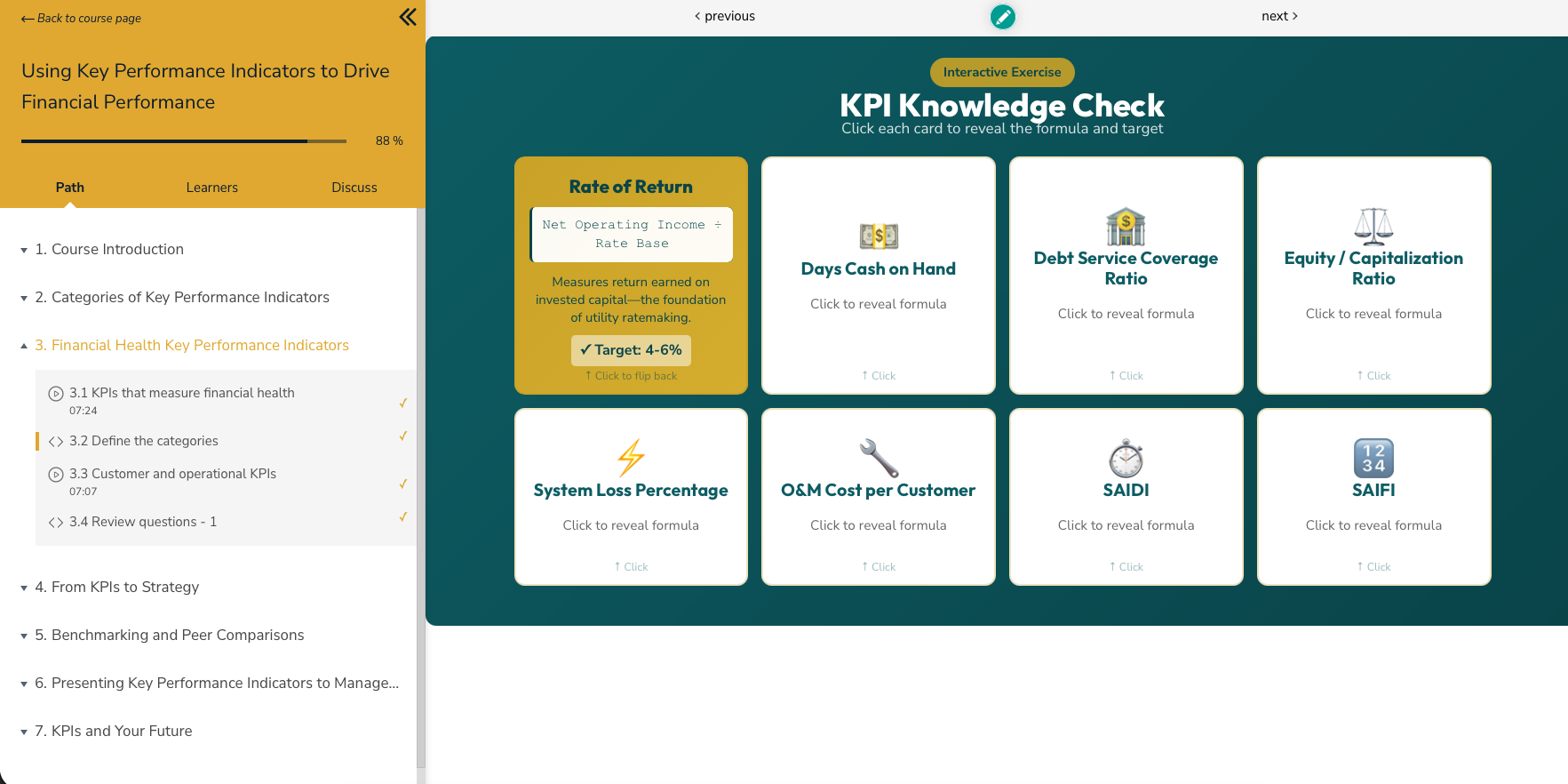
Covers core financial health KPIs — Rate of Return, Days Cash on Hand, Debt Service Coverage Ratio, Capitalization Ratio — with an exercise on identifying good KPIs for each situation. | 2.0 – Financial Health Key Performance Indicators | 2.1 – Exercise: What Is a Good KPI in Each Situation?
Covers operational efficiency and customer service KPIs including System Loss Percentage, O&M per Customer, SAIDI, and SAIFI, with review questions. | 3.0 – Customer and Operational Key Performance Indicators | 3.1 – Review Questions 1
Applies the KPI Action Cycle (Measure → Compare → Diagnose → Act) and connects KPI results to specific strategic decisions — rate studies, infrastructure investment, operational changes. | 4.0 – From KPIs to Strategy | 4.1 – Exercise: What Does Each KPI Measure?
How to benchmark KPI performance against peer utilities using appropriate comparison groups based on size, customer mix, and service territory characteristics. | 5.0 – Benchmarking and Peer Comparisons
How to present KPIs effectively using dashboard formats with current values, targets, trends, and clear narratives — plus review questions. | 6.0 – Presenting Key Performance Indicators to Management and Boards | 6.1 – Review Questions 2
Wraps up the course with next steps and your final exam. | 7.0 – KPIs and Your Future | 7.1 – Using Key Performance Indicators Course Completion | 7.2 – Final Exam | 7.3 – Course Completion and Next Steps!