
$
One-time enrollment · 12-month access
Enroll NowGroup pricing available →Request an invoice for paymentMaster the complete work order accounting process, from authorization to retirement. Covers capitalization and overhead allocation — built for utility and co-op finance professionals who need to get construction accounting right.
The FERC Uniform System of Accounts (USoA) is the bedrock of electric utility accounting in the United States. Every transaction, every capital project, every financial report ties back to this foundational framework — and understanding it is essential for anyone working in utility finance, operations, or management.
This course gives you a clear, practical grounding in how the system is structured and how to apply it with confidence. Plain language, real utility examples, and interactive exercises make the material stick.

Describe how construction costs flow from project authorization through capitalization, depreciation, and recovery in customer rates under FERC and RUS standards
Course overview, roadmap, and learning objectives — setting the stage for the full work order accounting process. | 1.1 – Introduction to FERC/RUS Construction Accounting | 1.2 – Your Course Roadmap | 1.3 – Course Learning Objectives
Establishes why construction accounting decisions directly drive customer rates — and the cost of getting it wrong. | 2.1 – Why Construction Accounting Drives Your RatesFree Preview
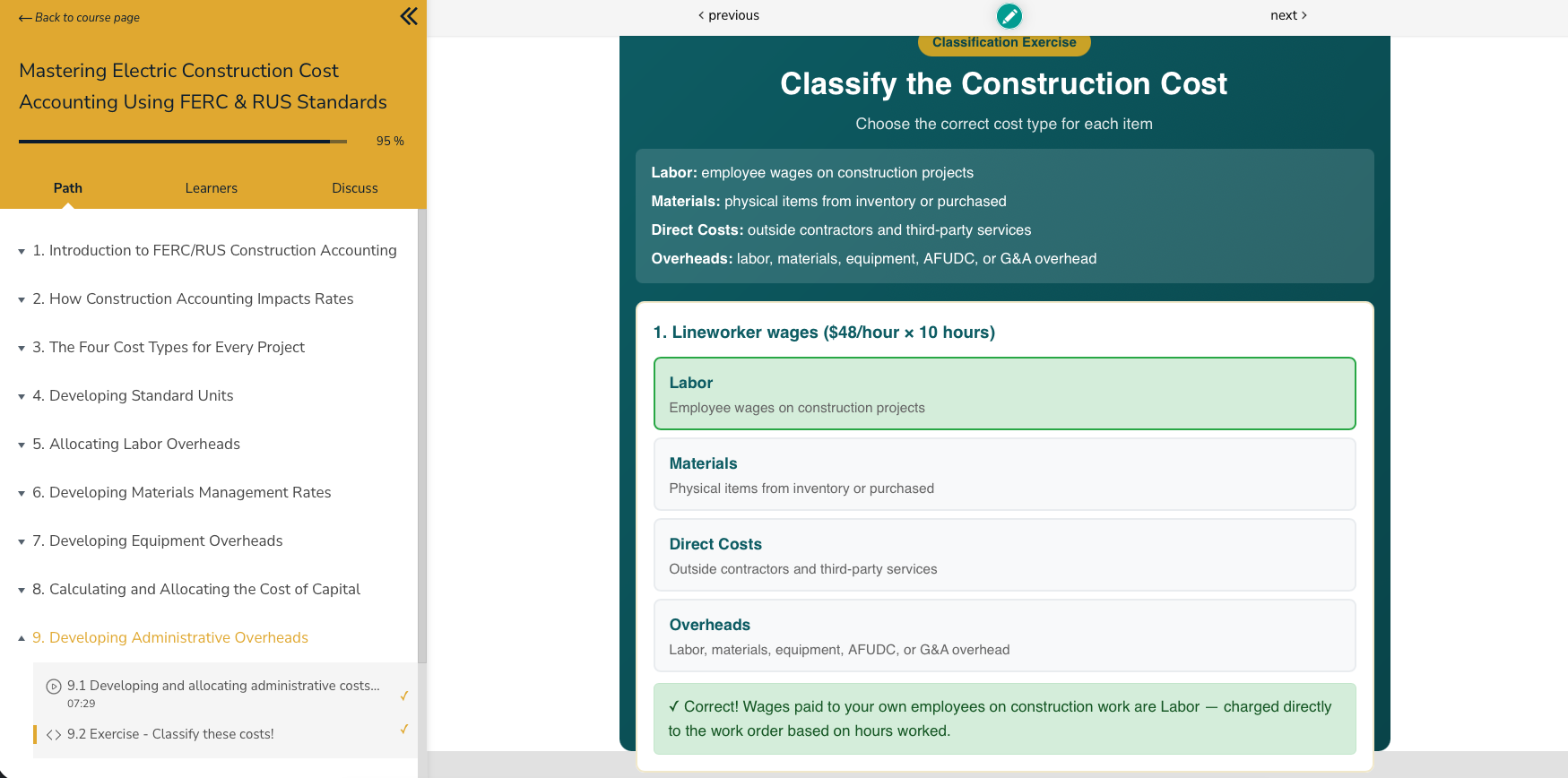
Covers the four categories that every construction cost must be classified into: Labor, Materials, Direct Costs, and Overheads. | 3.1 – The Four Cost Types for Every Project
Explains what standard units are, why they are essential to the work order system, and how to build them using a standard unit template. | 4.1 – Building a Standard Unit: Why You Need These in a Work Order System | 4.2 – Standard Unit Template
Walks through the calculation of fully-loaded labor overhead rates and how to apply them to construction work orders. | 5.1 – Developing Fully Costed Labor Overhead Rates
Covers stores (materials management) overhead rates, how they are calculated as a percentage of materials issued, and review questions. | 6.1 – Developing Materials Management (Stores) Overhead Rates | 6.2 – Review Questions
Covers equipment overhead rate development and application, with an interactive exercise classifying overhead types. | 7.1 – Developing and Applying Equipment Overhead Rates | 7.2 – Exercise: What Are These Overheads?
Develops the Allowance for Funds Used During Construction (AFUDC) rate and demonstrates monthly application to outstanding CWIP balances. | 8.1 – The Cost of Capital: Developing the AFUDC Rate